
Ensign Global University Hosts Undergraduate Spring Break Course in Public Health for Carroll University
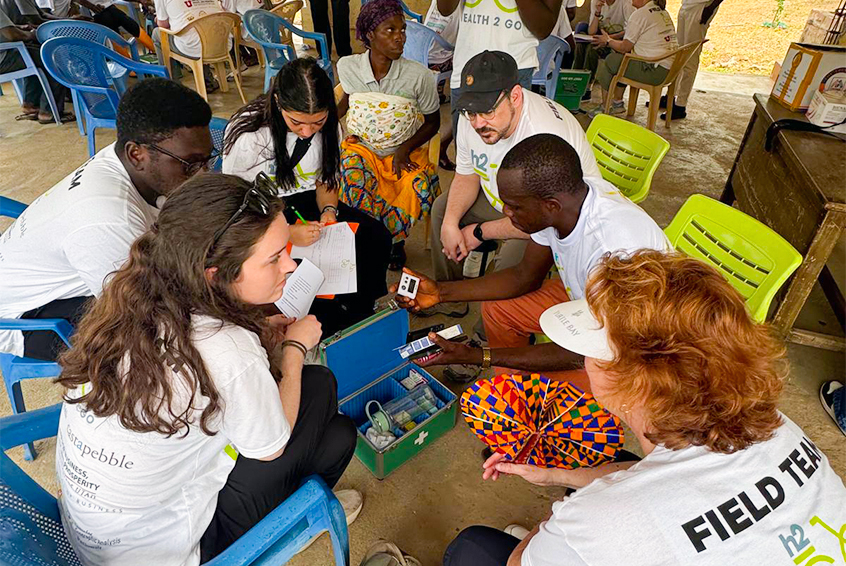
Community Based Agents (CBAs) from Health 2 Go shared their equipment, insights, and challenges rural communities face with the guest from Carroll as part of their day in Oblemanya.
Ensign Global University welcomed faculty and students from Carroll University (Waukesha, WI, USA) to campus in Kpong as part of a new partnership and spring break program. The students participated in an undergraduate course designed by Ensign Global University to provide visiting undergraduate students an introduction to grassroots work in public health. Through the course, Socioeconomic Development in Emerging Markets, students explored themes in public health, including the global promotion of prosperity in emerging market countries, and how innovation and entrepreneurship support improved holistic well-being. Students and faculty from Carroll University conducted eight weeks of online classwork and discussions led by Ensign Global President Dr. Stephen C. Alder and several guest lecturers. Culminating with spring holiday travel to Ghana, the students then engaged in hands-on prosperity promotion practice through interaction with local community organizations and development projects during their 10-day trip.
As part of their fieldwork in Ghana, the Carroll course toured the Kpong Health Clinic and its new maternity ward, where students engaged with leaders of the facilities, learning about the challenges associated with health care education and access in rural settings as well as recent advancements made through partnerships between Ensign Global University, the Ghanaian Ministry of Health, and Health 2 Go, a distribute health care system headquartered on the campus of Ensign Global University. Part of the students’ fieldwork also involved a visit to the community of Boti in Ghana’s Eastern Region. With prior training on campus, the students used GPS devices to map community resources and infrastructure, collecting data to help inform the expansion of the Health2Go project to Boti while supporting the equitable distribution of resources.
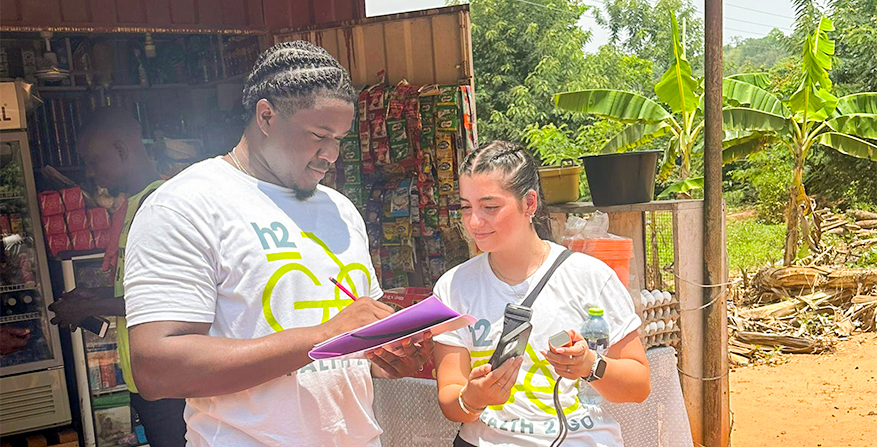
On another outing, students traveled to Oblemanya in the Lower Manya Municipality, meeting with local elders and Health 2 Go’s Community Based Agents (CBAs), the frontline workers who provide healthcare services and education to local citizens. As highlighted in the British Medical Journal last year, these types of efforts have led to a reduction in under-five mortality by up to 68% in rural Ghanaian communities. Visiting Carroll students and faculty were able to gain firsthand knowledge and valuable insight into the development and delivery of health care systems in Ghana as part of these interactions. During their visit to Oblemanya, students from Carroll also assessed equipment used in the administration of the Health2Go project. Students helped CBAs manually document faulty equipment to inform procurement and replacement efforts. In small group discussions and walking tours across the community and down to the Volta River, the CBAs explained in detail their access to the community by bicycle, the work they perform during regular visits, and the vital role reliable equipment plays in their efforts.
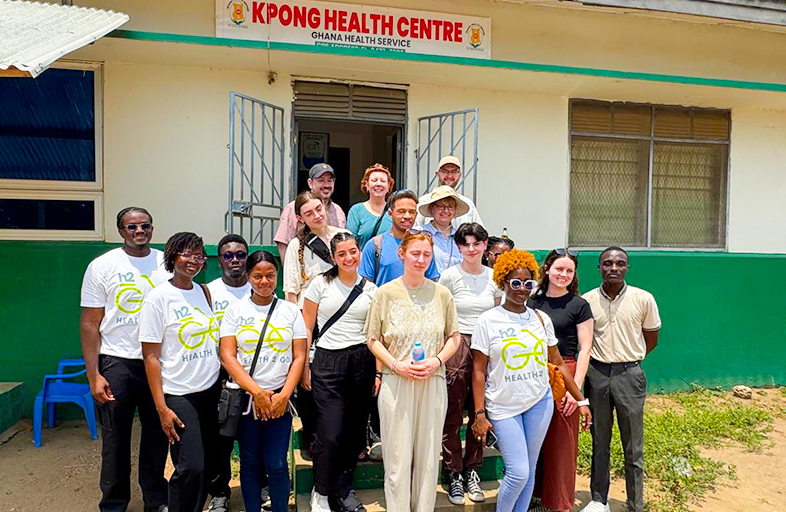
Carroll faculty member Patrick Grayshaw elaborated on the group’s work with Health 2 Go in Oblemanya stating, “I arrived in Ghana with high expectations, but the experiences still blew them away. Seeing the Health 2 Go program in action and witnessing how they empower community-based agents to bring life-saving care to the doorsteps of the community just highlighted the true meaning of public health. Traveling from the bustling city of Accra to the more remote communities, you realize just how vital these rural health links are in getting services to those in the most need.”
The course also provided Carroll students and faculty an opportunity to experience the history and culture of Ghana. Upon arrival, the group spent their first day in-country touring Elmina Castle and learning the history of the slave trade in West Africa before visiting Kakum National Park and a breathtaking Canopy Walk across its rainforest. The highlight of the excursion aspect of the course was an elephant safari in Mole National Park. Barbra Beck, Chair of the Department Public Health at Carroll University commented on the trip saying, “My experience working with Ensign Global University was exceptional. The faculty and staff were kind, accommodating, and extremely helpful. Our time in Ghana was a powerful blend of hands‑on learning, deep cultural engagement, and the quiet moments students needed to absorb and make sense of everything they were encountering. I look forward to bringing another group of students next academic year.”
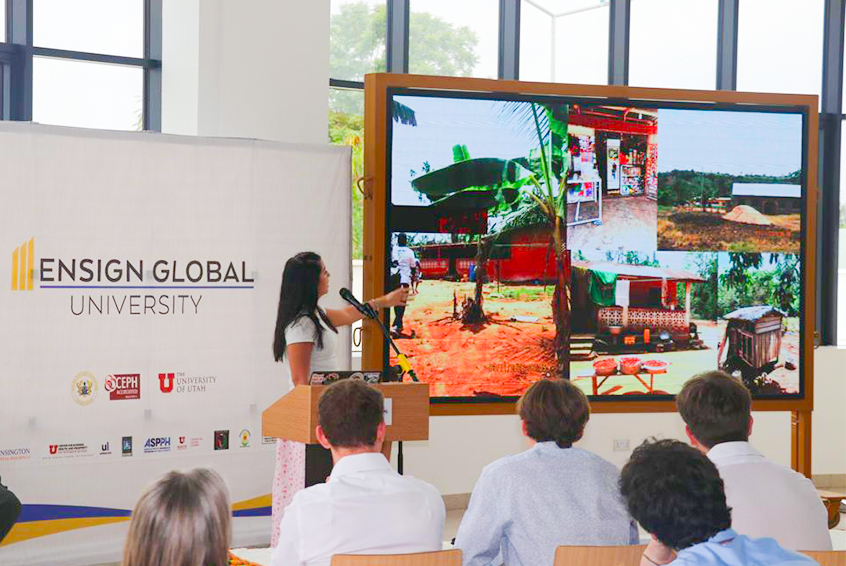
Student feedback from their experiences was just as positive. Sophomore Savannah Brandt stated, “Traveling to Ghana, I learned so much more than I could in any classroom. I experienced hands-on data collection as well as rewarding and perspective changing conversations with Ensign Global students and the Community Based Agents. I learned many insights that I will use in my future career and made memories that I will remember forever.” From a Ghanaian perspective, Nana Bassaw-Ansah, Senior International Student Advisor at Ensign Global University noted, “For me, it is always inspiring to see people from different parts of the world come together to tackle human challenges. The Carroll students were passionate, genuinely curious about how foreign health systems operate, and deeply thoughtful in their observations. What stood out most was a willingness to share perspectives and contribute while consistently acknowledging cultural contexts, recognizing that meaningful solutions must be rooted in the social realities of Ghana. The program was a truly enriching experience, and I look forward to welcoming more groups to our campus.”
In addition to offering the first CEPH-accredited, in-person Master of Public Health program on the African Continent, Ensign Global has continued to expand its international initiatives through partnerships, faculty professional development opportunities, and programs for visiting international students and scholars. This summer, the university will welcome several other visiting universities and classes to campus. Program that have an interest in exploring possible partnerships are encouraged to contact Ensign Global University directly at info@ensign.edu.gh.