
Ensign Global University Reiterates Commitment to Deliver Healthcare Access to Underserved Communities
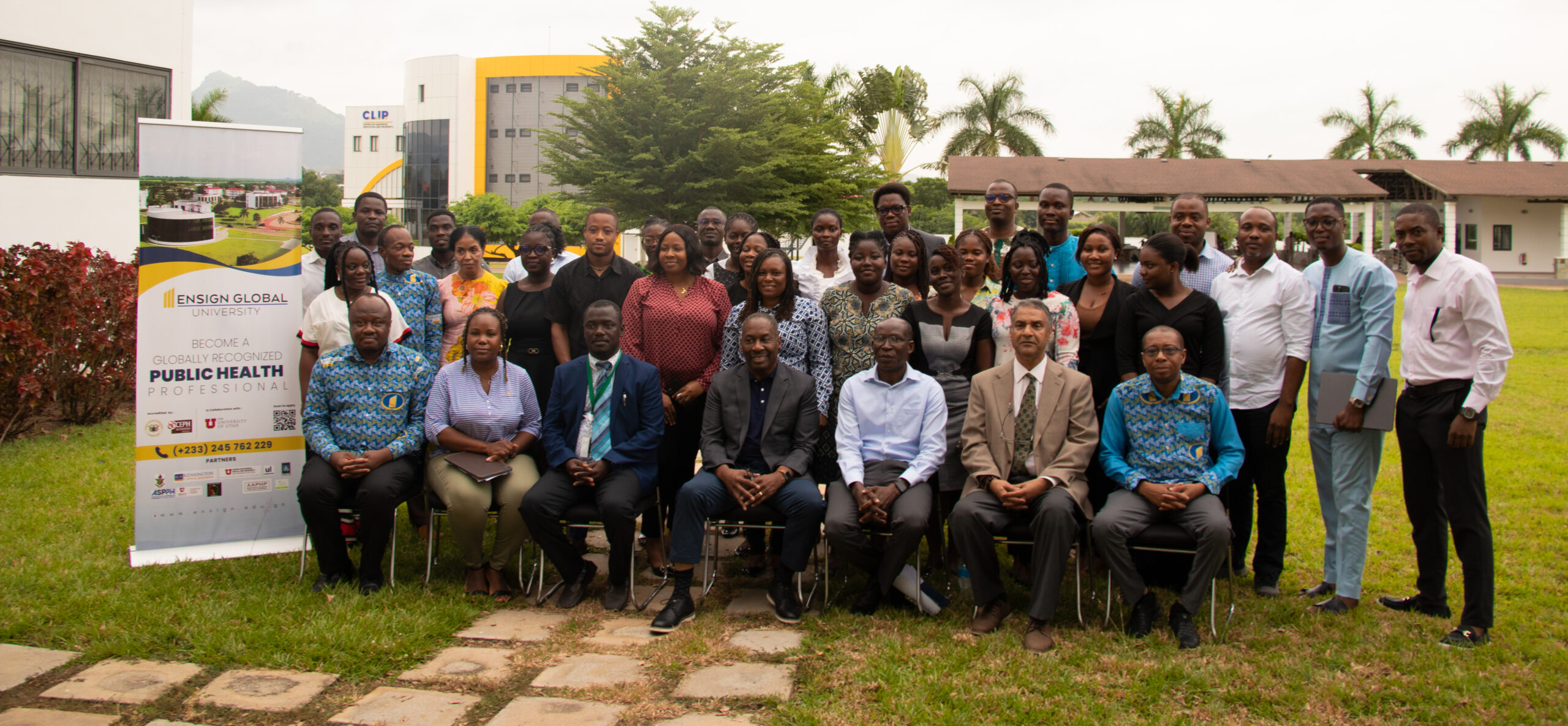
Ensign Global University has long been committed to delivering healthcare across underserved communities in Ghana. This commitment was reiterated at a conference organized by Ensign Global University in collaboration with the Celia Scott Weatherhead School of Public Health and Tropical Medicine at Tulane University, based in the United States. The conference was organized under the theme “The Future of Global Health Research and Practice.”
The event brought together distinguished global public health leaders, academics, and researchers to chart a bold, collaborative future for addressing complex health challenges in Africa and beyond. Held both in-person at the Ensign Global University campus in Kpong and virtually via Zoom, the hybrid conference attracted over 100 participants from Ghana, Africa, and the United States. The event reaffirmed Ensign Global University’s growing reputation as a convening ground for multidisciplinary research partnerships and innovative leadership in the field of public health.
In his welcome remarks, Professor Stephen C. Alder, President of Ensign Global University, highlighted Ensign’s significant contributions to public health research and practice through initiatives like its “Health2Go” Project, the Engage Now Africa Partnership, collaborations with the University of Utah Centre for Global Surgery, David Eccles School of Business, and the Lassonde Entrepreneur Institute.
“As a university, we are committed to delivering healthcare access to underserved communities through our Master’s in Public Health Program and other initiatives to improve on healthcare delivery in Ghana and Africa,” Alder stated.
Professor Thomas LaVeist, the Dean of the Tulane School of Public Health & Tropical Medicine, commended Ensign Global University’s visionary leadership and underscored the importance of deepening academic partnerships between Tulane and Ensign Global University to advance global health outcomes.
The conference featured insightful panel discussions that explored a range of emerging priorities in global health, including maternal and child health care, mental health and psychosocial research, data science, artificial intelligence (AI) and public health innovation, methodological advances in machine learning, ethical and regulatory implications of AI in healthcare, and strategies for building collaborative student-faculty research partnerships.
Dr. Samuel Kakraba, an Assistant Professor at the Celia Scott Weatherhead School of Public Health and Tropical Medicine and liaison for the Tulane-Ensign Global University engagement, emphasized the critical need for students to understand the data science behind AI applications in public health, while Dr. Stephen Manortey, Head of Academic Programs, Ensign Global University, announced the school’s upcoming policy requiring students to formally acknowledge the use of AI in academic work.
The event marks a significant milestone in Ensign Global University’s mission to position itself as a leading hub for public health education, leadership development, and research excellence in Africa and globally.