
Ensign Global University Delegates Represent EGU at Global Public Health Congress
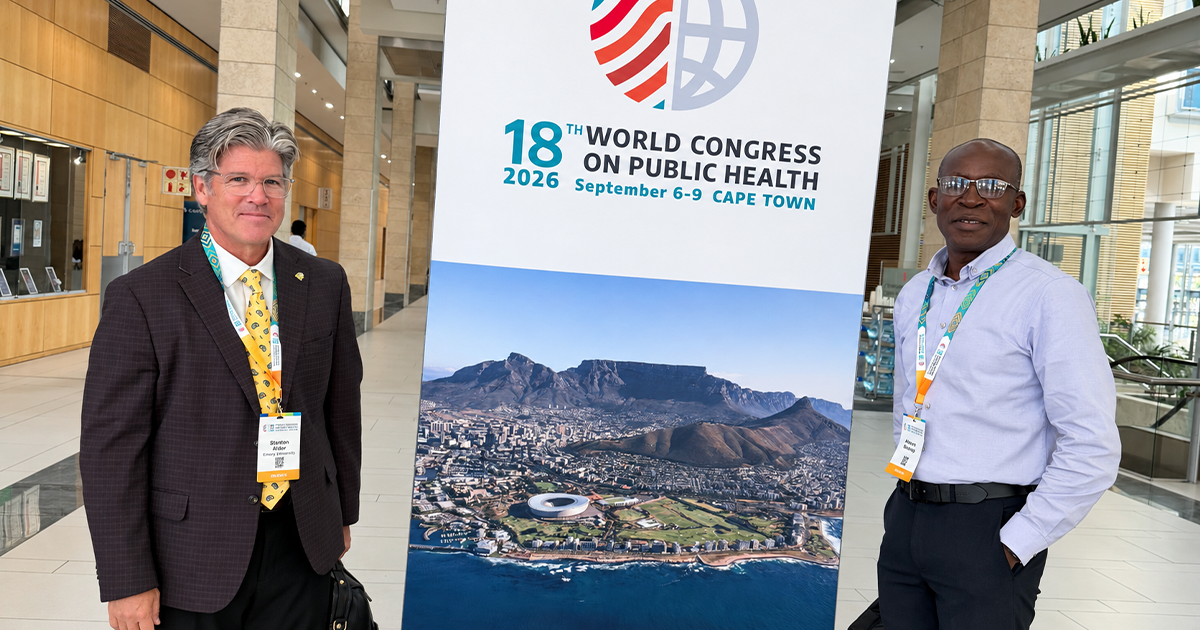
Ensign Global University President Stephen C. Alder, left, and Professor Stephen Manortey represent EGU at the 18th World Congress on Public Health in Cape Town, South Africa.
Ensign Global University President Stephen C. Alder, Ph.D., MBA, and Professor Stephen Manortey, Ph.D., head of academic programs, represented EGU as delegates at the 18th World Congress on Public Health, held in Cape Town, South Africa.
The international gathering brought together public health leaders, researchers and practitioners to exchange ideas and explore collaborative approaches to pressing health challenges. EGU’s participation reflected the university’s growing role in global conversations about community health, academic partnerships and the conditions that help people and communities prosper.
During the congress, Alder presented “Advancing Global Public Health Diplomacy Through Academic Partnerships.” His presentation explored how universities can bring together partners from multiple sectors to address complex health challenges and advance prosperity worldwide.
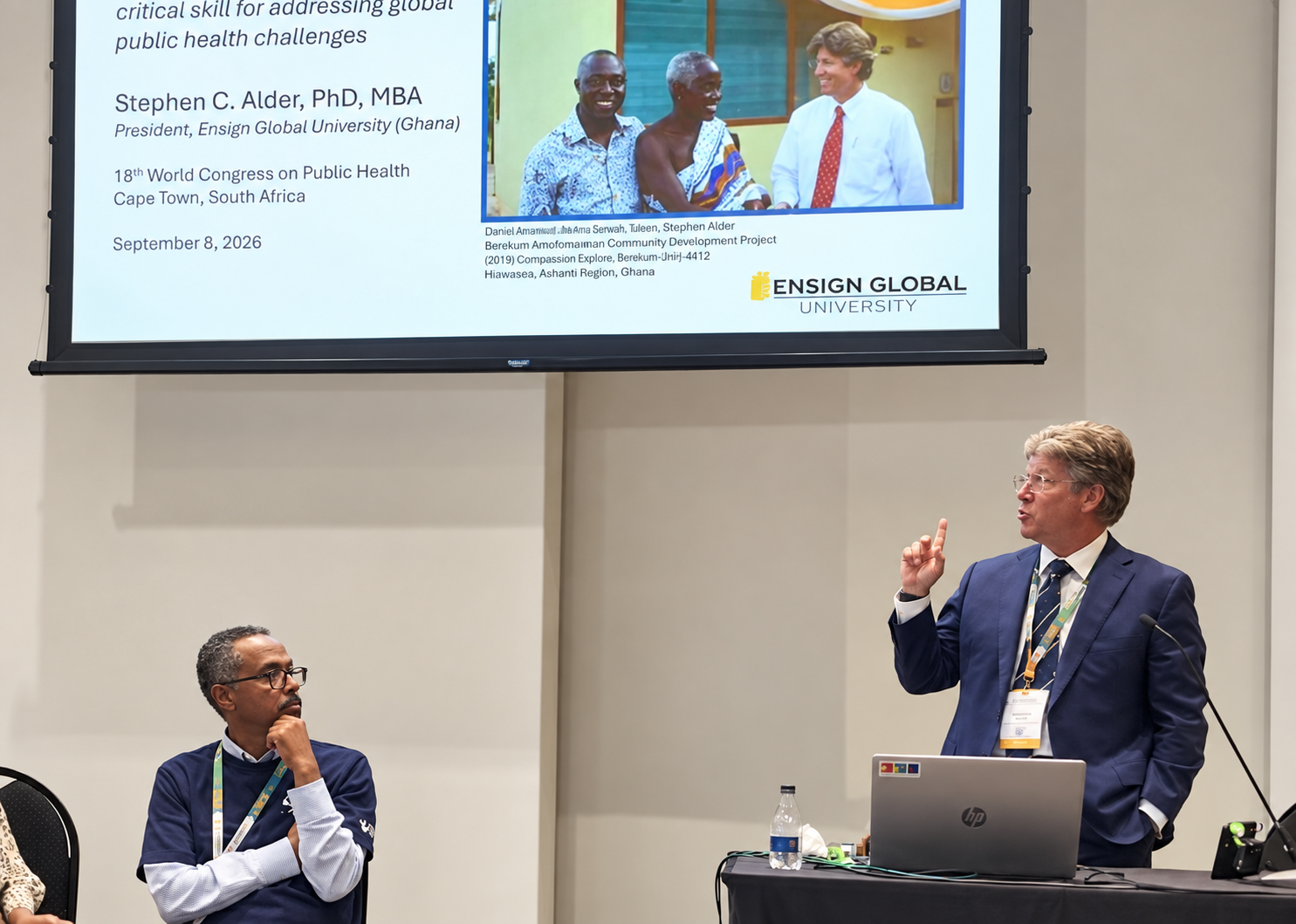
Alder serves as president of Ensign Global University and executive director of Prosperity U at the University of Utah, EGU’s partner institution in the United States. Drawing from his work across both universities, he argued that the future of public health depends on a broader understanding of what allows people and communities to flourish.
Health care remains essential to that work, but Alder’s approach extends beyond the delivery of medical services. Employment, economic opportunity, education and effective institutions all influence health. By treating living-wage employment and business development as public health priorities, academic institutions can address conditions that shape health long before a person enters a clinic.
Health2Go offers one example of this approach in action. Developed through EGU’s work in Ghana, the program trains community-based agents to provide health education, manage basic illnesses under clinical supervision and connect patients with health facilities when more advanced care is needed. Manortey serves as the program’s in-country principal investigator, leading efforts to expand sustainable health care delivery in hard-to-reach communities.
Research published in BMJ Global Health in 2025 documented a 67.7% reduction in all-cause child mortality in participating communities. It also found that Health2Go shifted 83% of visits for uncomplicated childhood malaria from clinical facilities to community-based care. Ghana’s Ministry of Health, Ghana Health Service and EGU have established a formal partnership to support the model’s expansion.
EGU’s presence at the congress highlighted how academic institutions can contribute both research and practical experience to global public health. Through continued collaboration with the University of Utah and other partners, EGU is connecting health with education, economic opportunity and the broader conditions required for lasting prosperity.